
Hair Care, Reconsidered
Could Light-Based Hair Care Be Missing From Your Routine?
More people are exploring laser-based hair care devices as part of their everyday routine — alongside the shampoos, serums and supplements they already use. Here's what the science says, how the technology actually works, and how to find out if it fits your routine.
The Full Picture
Hair Loss, Explained
Somewhere between your first grey hair and your last box of shampoo, hair loss stops being a single event and becomes a long, slow negotiation between biology, habit, and time.
Most people don't notice hair thinning as a moment — they notice it as a pattern. A few more strands on the pillow. A part that looks a little wider in photos from a year ago. A ponytail that feels thinner in the hand.
That gradual quality is exactly what makes hair loss confusing to deal with. Unlike a cut or a rash, there's no single day it starts, which makes it hard to know when — or whether — to do anything about it.
It also makes hair loss easy to research badly. A slow-moving problem invites fast-moving marketing: before-and-after photos with no context, ingredient lists that sound clinical but say little, and promises that skip past the part where consistency, not a single product, tends to matter most. Cutting through that noise starts with understanding the biology underneath it — which is what the rest of this page is for.
Hair loss is rarely one problem. It's usually several small ones, compounding quietly over years.
The good news is that the biology behind it is well understood, even if it isn't well explained. Hair follicles are living structures that respond, gradually, to a mix of genetics, hormones, age, stress, and the physical habits — heat styling, tight hairstyles, harsh chemical treatments — that stack up over years. None of those inputs act alone, which is exactly why single-ingredient fixes so often disappoint.
Understanding the cycle itself is the first useful step, because it reframes the whole problem. Hair loss isn't really about hair falling out — strands are supposed to shed as part of a healthy cycle. It's about the balance between shedding and regrowth shifting, cycle after cycle, until density visibly changes. That distinction matters, because it points toward routines that support the cycle over time rather than promise to stop shedding outright.
The sections below walk through that cycle in more detail, the reasons follicles slow down as that balance shifts, and where a light-based routine like Lovvley fits alongside the basics you already know — shampoo, diet, and stress management.
How Hair Actually Grows
The Hair Growth Cycle
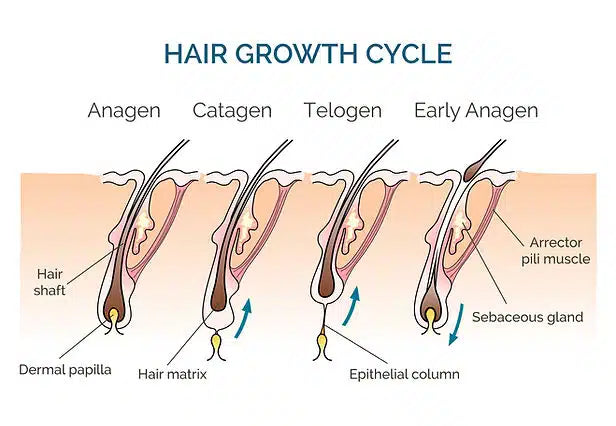
Every strand on your head is somewhere in a four-phase cycle — and hair thinning is really a shift in how much time strands spend in each phase.
Anagen — Growth
The active growth phase. Most hairs spend two to seven years here, growing steadily from the follicle at roughly half an inch per month — the longer this phase lasts, the longer hair can grow.
Catagen — Transition
A short, weeks-long transition where growth slows, the follicle shrinks slightly, and it begins preparing to rest rather than continuing to grow.
Telogen — Resting
A resting period of a few months where the strand is fully formed but no longer actively growing, while the follicle stays dormant beneath the surface.
Exogen — Shedding
The resting strand releases, often during washing or brushing, and a new strand begins forming underneath it in the same follicle — the cycle starts again.
Going Deeper
Why Follicles Become Inactive
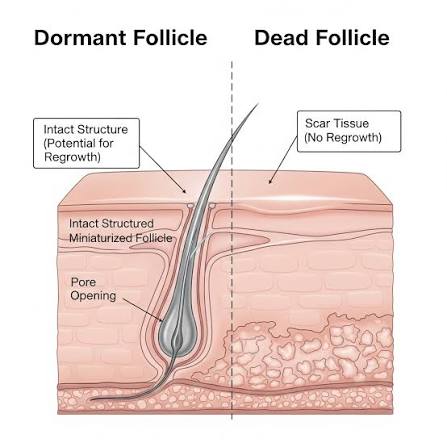
Hair thinning generally isn't about follicles disappearing — it's about follicles gradually producing thinner, shorter strands over successive growth cycles, and spending more time resting between cycles.
Researchers sometimes call this pattern miniaturization: a follicle that once produced a thick, pigmented strand for years at a time starts producing a finer, shorter-lived one instead. Repeat that shift across thousands of follicles and thousands of cycles, and the cumulative effect is a scalp that looks progressively less dense — not because hair is missing, but because what's growing is smaller.
Genetics set the pace for a lot of this, which is why family history is often the first question asked about hair loss. But pace isn't destiny. Circulation, inflammation, and the general condition of the scalp environment all influence how a follicle behaves cycle over cycle, which is part of the reasoning behind scalp-focused routines rather than hair-focused ones.
Over years, this pattern can make a full head of hair look progressively less dense, even though most of the original follicles are still present. It's part of why consistency, rather than a single fix, tends to matter most in any hair care routine.
A Closer Look
Why Traditional Shampoos Often Have Limitations
Shampoo is a cleansing product first. Even the ones marketed toward thinning hair are typically on the scalp for under a minute before being rinsed away — not much contact time for any active ingredient to do meaningful work.
Serums face a related but different limitation: they stay on the scalp longer, but absorption depends heavily on technique, consistency, and how well the product actually reaches the skin through existing hair — a leave-on product applied inconsistently doesn't get much more contact time than a shampoo used well. Supplements work from a third angle entirely, supporting the body's general nutritional inputs rather than delivering anything directly to the scalp, which makes them a slower, more indirect layer of any routine.
None of this makes any of these categories bad — it just means each one is solving a narrower piece of the puzzle than its marketing sometimes suggests. That's not a knock on shampoo, serums, or supplements; it's simply a reminder that each has a different job. The limitation shows up when one product is expected to carry the full weight of a hair care goal on its own, when leave-on and hands-free approaches generally get more consistent contact time with the scalp.
A Shift Toward At-Home Care
Why Laser Therapy Has Become Popular For At-Home Use
Low-level laser therapy isn't new — clinical-style devices have existed for years, often bulky, expensive, and confined to a treatment chair. What's changed is accessibility. Diodes have gotten smaller and more efficient, batteries last longer, and manufacturing costs have dropped enough to build the technology into a lightweight, wearable cap instead of a bulky clinic device.
Convenience plays a large role too. A routine step that requires driving to an appointment competes with every other demand on a person's calendar, and it tends to lose. A routine step that takes fifteen minutes at home, layered into something already happening — reading, commuting, working from a desk — has a much better chance of actually happening consistently, which matters more than almost any other single factor in a slow-moving process like hair growth.
That shift mirrors a broader pattern in personal care: routines that once required an appointment — teeth whitening, red light therapy, certain skincare treatments — have moved into daily life as the hardware became smaller and more affordable. Hair care is following the same curve, and at-home LLLT devices are a big part of why.
Under The Hood
Inside The Lovvley Cap
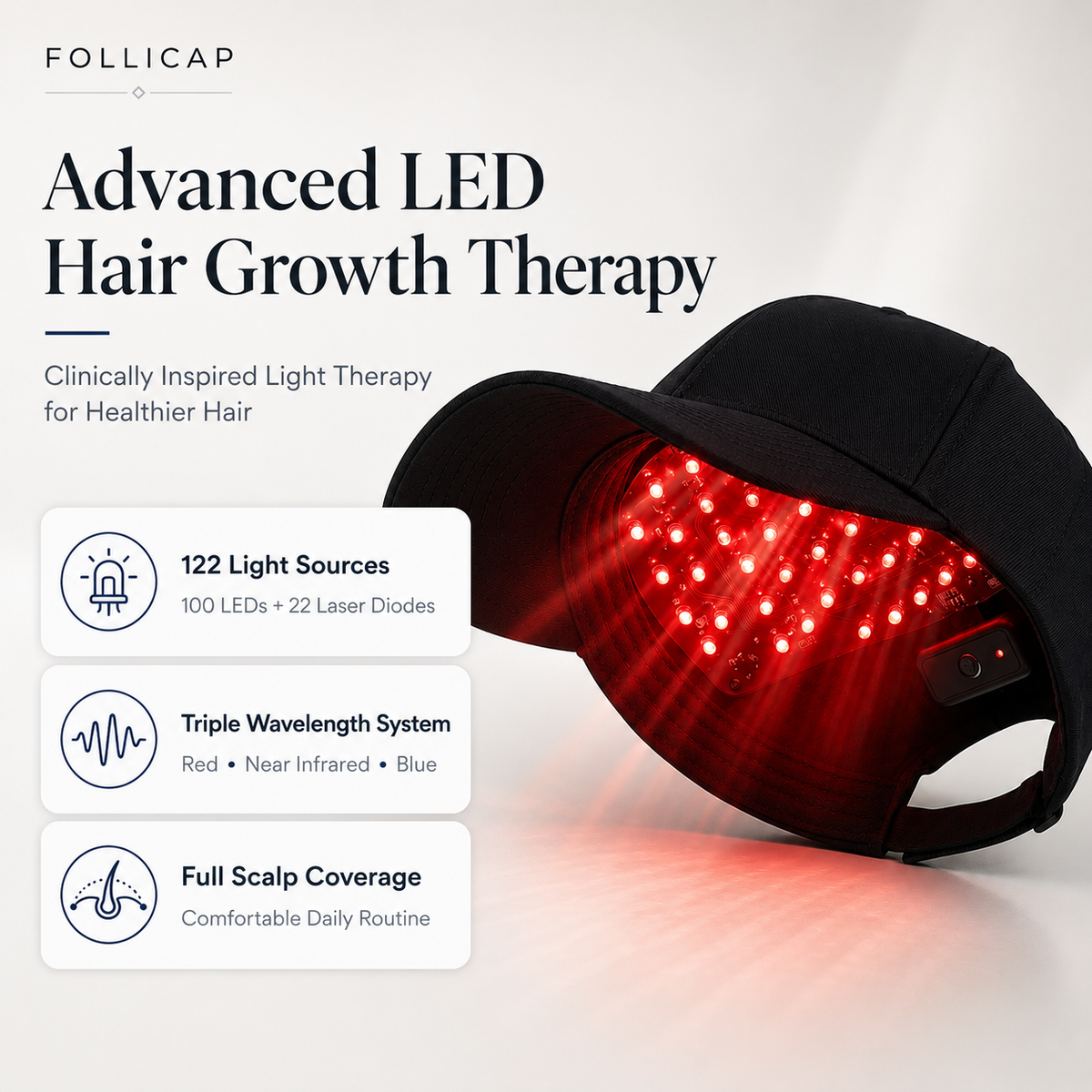
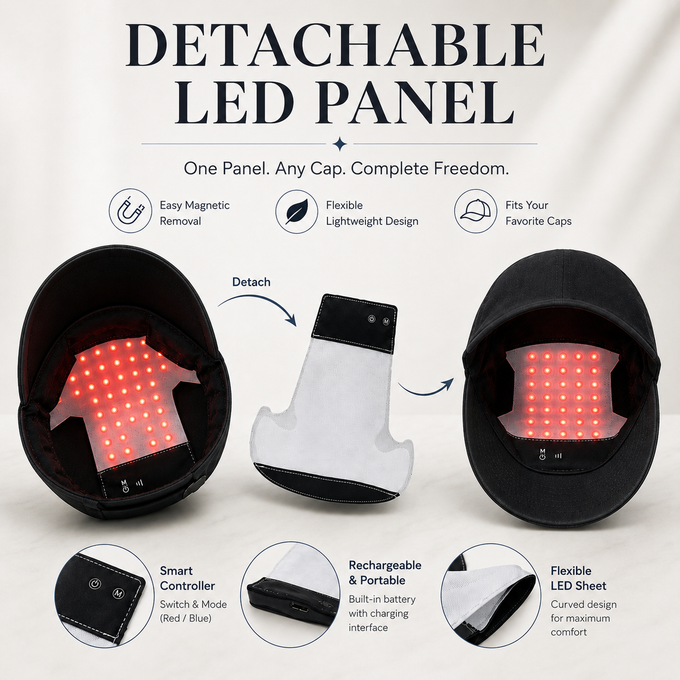
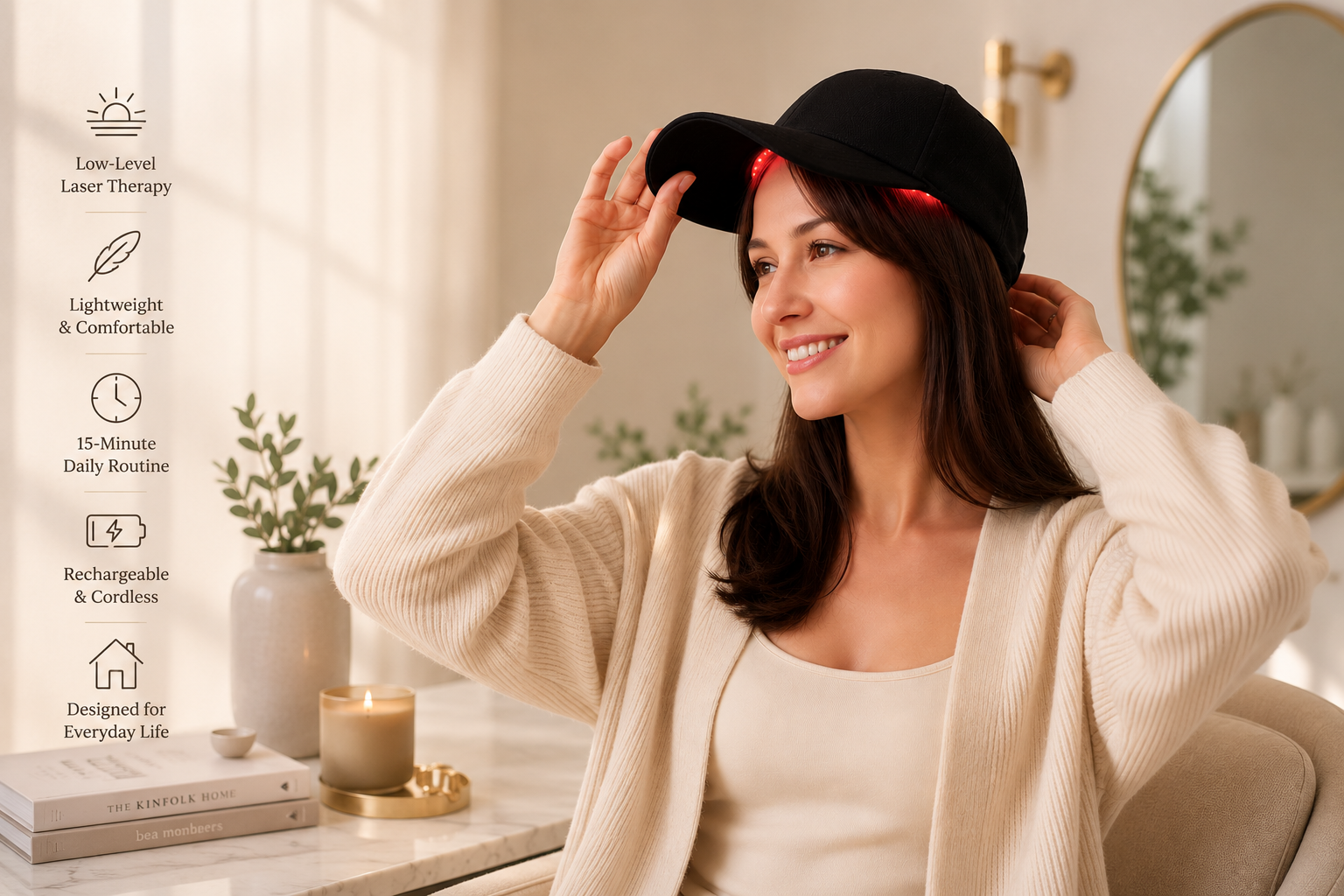
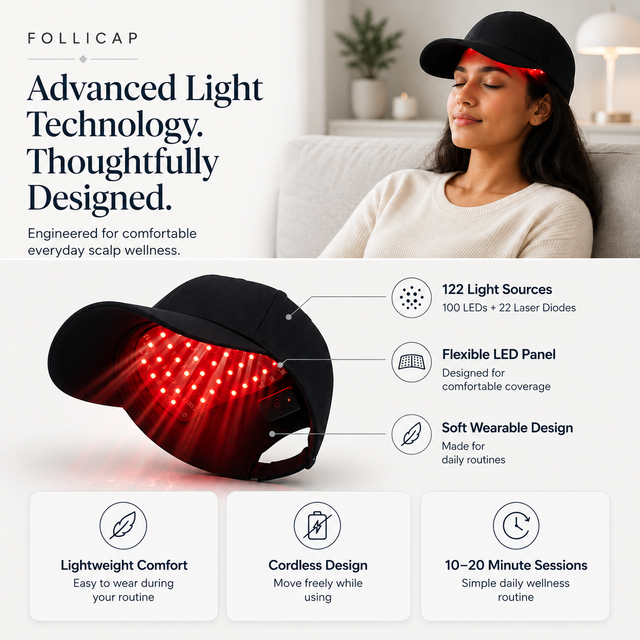
The cap houses an array of medical-grade laser diodes arranged to give even coverage across the crown and hairline, wired to a rechargeable battery pack in the back panel. A soft, adjustable inner band holds the diodes close to the scalp without pressing down on it, so the fit stays comfortable across a full session rather than tightening around the head like some earlier-generation devices.
The internal frame is built from a flexible, breathable shell that molds to different head shapes instead of relying on a single rigid size. That's a deliberate departure from clinical LLLT devices, which are often bulky and designed for a stationary treatment chair rather than a morning routine.
There's no app to pair, no screen to configure — a single button starts a timed session and the cap powers off automatically when it ends, so there's nothing to remember beyond putting it on.
Each unit goes through quality checks before it ships, covering diode output consistency, battery cycle life, and the internal frame's fit across a range of head sizes. The goal is a device that performs the same way on day three hundred as it did on day one, since a routine only stays a routine if the hardware holds up.
- DiodesMedical-grade laser array
- Session Length10–15 minutes
- WeightUnder 12 oz
- ControlsSingle-button, no app required
Part Of The Routine
Designed To Disappear Into Your Morning
Fifteen minutes, once the routine sticks, is barely noticeable — coffee, a podcast, or the last few minutes of getting ready.
Is This Right For You?
Who Lovvley Is Designed For
Being upfront about fit matters to us more than making a sale — here's an honest look at who tends to get the most out of Lovvley, and who might want to look elsewhere or check with a doctor first.
Likely A Good Fit
- You're noticing early thinning and want to be proactive about your routine before it progresses further.
- You already have a hair care routine and want to add a hands-free step rather than start from scratch.
- You can realistically commit to a few short sessions a week for several months, not just a few days.
- You prefer an at-home option over scheduling and paying for recurring clinic visits.
- You're looking for a routine addition that layers with what you already do, not a single miracle fix.
Probably Not The Right Fit
- You have a diagnosed scalp or skin condition and haven't checked with a doctor about adding a new routine step.
- You're pregnant or nursing and haven't cleared new routines with a physician first.
- You have a history of photosensitivity, light-triggered migraines, or light-triggered seizures.
- You're looking for a guaranteed, fast, or one-time fix rather than a routine built around consistency over months.
This is general guidance intended to help you self-screen, not medical advice or a complete list of every consideration. If you're unsure whether Lovvley fits your situation, check with a healthcare professional before starting.
Educational
A Dermatological Perspective
General Dermatology Principles
Dermatologists generally frame hair thinning as a scalp-health issue as much as a hair issue — circulation, inflammation, and follicle condition all play a role alongside genetics. That's part of why many clinical routines combine more than one approach rather than relying on a single product.
Scalp examinations often look at more than just density: redness, flaking, and tenderness can all be signs that something beyond ordinary thinning is going on, which is one reason dermatologists tend to recommend a professional evaluation before starting any new routine if something feels off, rather than guessing from home.
Consistency is a theme dermatologists return to often: a routine used sporadically for a few weeks is unlikely to show much, simply because hair growth cycles are measured in months, not days. It's a slower process than most skincare or fitness routines, which can make it easy to give up right around the point where a longer-term routine would start to show whether it's a fit.
This is also why most reputable guidance steers away from fixed timelines or guaranteed outcomes: biology varies enough from person to person that a routine promising a specific result by a specific date should generally be treated with some skepticism, regardless of the category it falls into.
This section reflects general dermatological principles for educational purposes only and is not a claim of endorsement, partnership, or medical advice from any specific practitioner, clinic, or organization. Consult a licensed dermatologist for guidance on your own scalp and hair health.
The Science, Simplified
What Low-Level Laser Therapy Actually Does
Low-level laser therapy uses specific wavelengths of red light that penetrate the scalp's surface. This light energy is thought to interact with cells in the hair follicle, part of a process sometimes called photobiomodulation.
Photobiomodulation isn't unique to hair care — related wavelengths are studied across skin, muscle, and joint applications, generally around the idea that certain light energy can influence cellular activity without heat or damage to the surrounding tissue. In hair care specifically, the working theory is that this input reaches cells around the follicle during its active growth phase.
The idea is simple: give the scalp a consistent, gentle input over time, as part of a broader hair care routine that already includes what you shampoo, apply and take. It's one input among several, not a replacement for the rest of a routine.
Individual experiences vary. This information is educational and not medical advice. Always read and follow the instructions included with your device, and consult a healthcare professional if you have a medical condition or are pregnant.
Try It Yourself
This Is What The Hair Quiz Feels Like
A quick look at the kind of question you'll see in the real assessment — tap an option below to see how it responds before you commit to the full version.
What brings you here today?
This is a preview — your real results come from the full 2-minute assessment.
Take The Full AssessmentWhat You'll Get
Your Personalized Recommendation, Previewed
Here's an example of what the quiz hands back at the end — a recommended routine, a suggested frequency, and a fit score. Yours will be based entirely on your own answers, not this sample.
Buy With Confidence
Try Lovvley With Less Risk
We want you to feel good about adding Lovvley to your routine before you've even tried it — here's how we back that up, in plain terms.
2-Year Limited Warranty
Every Lovvley device is covered against manufacturing defects for two years from the date of delivery — the diode array, the battery, and the outer housing are all included under the same coverage.
Covers manufacturing defects under normal use. Does not cover accidental damage or unauthorized modification. See the warranty card included with your order for full terms.
30-Day Money-Back Guarantee
Try Lovvley as part of your routine for a full 30 days. If it's not a fit for your lifestyle or your hair, contact our support team for a full refund on your first order — no complicated forms, no hassle, no runaround.
Applies to first-time orders within 30 days of the delivery date. Device must be returned in its original packaging with all included accessories to qualify for a refund.
Ready For A Personalized Recommendation?
Answer a few questions about your hair, goals, and routine to discover which Lovvley setup best matches what you're actually looking for — it takes about two minutes.
START MY HAIR ANALYSISTakes about 2 minutes · No account required
Prefer To Skip The Quiz?
No hard feelings — you can browse the full collection and choose a routine yourself, using the comparisons above as a guide.